Digital Loyalty Program for Small Business: Boost Repeat Customers 30%
A digital loyalty program for small business boosts repeat customer rates by up to 30% without increasing marketing spend. Learn how to set one up.
Most independent businesses are sitting on a revenue leak they can't see. A customer walks in, has a great experience, and never comes back, not because they were unhappy, but because nothing pulled them back. A digital loyalty program for small business fixes exactly that problem, and it doesn't require a tech team, a big budget, or weeks of setup.
This guide is written for café owners, barbershops, gyms, studios, and every other independent local business that wants more repeat customers, and wants to see the numbers behind why it works.
Why Independent Businesses Lose Repeat Customers (And What It's Actually Costing You)
It costs several times more to acquire a new customer than to keep one. Yet most independent businesses spend almost nothing on keeping customers coming back, while constantly chasing new ones. That's a structural problem.
The Leaky Bucket Problem: One-Visit Customers
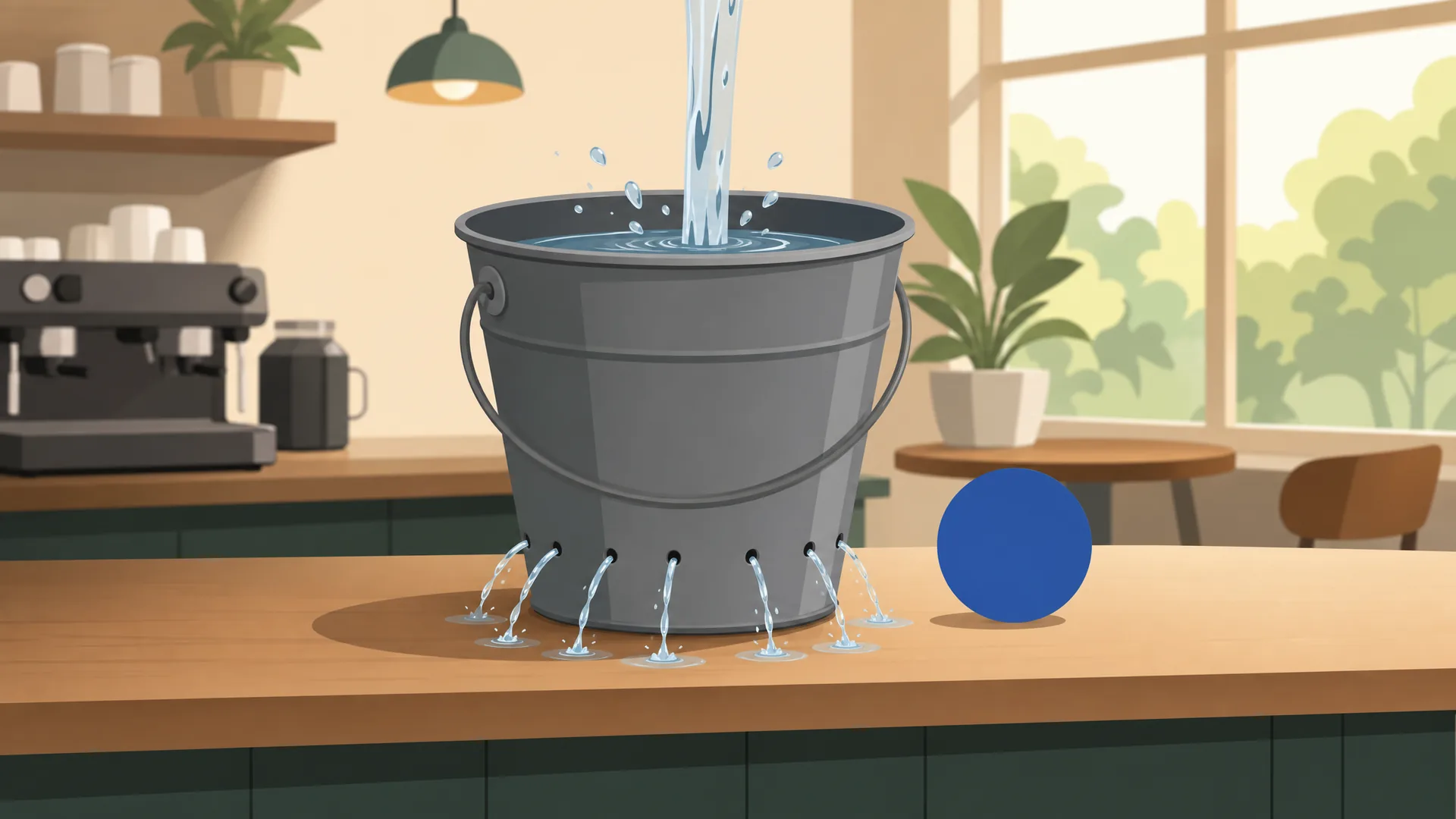
Picture a bucket. You pour customers in at the top, through ads, word of mouth, footfall. But there are holes in the bottom. Every customer who visits once and doesn't return is a hole. You keep filling the bucket. The holes keep draining it.
The maths is brutal. If 100 customers visit your café this month and 70 never return, you need 70 new customers just to stand still. Plug even half those holes with a structured repeat customer program, and your revenue grows without spending a penny more on acquisition.
Most small businesses have no structured loyalty scheme, not out of laziness, but because the old tools (paper punch cards) barely worked, and the new ones looked like they were built for Starbucks, not a ten-table café.
That's changed.
What a Digital Loyalty Program for Small Business Actually Is
A digital loyalty program replaces your paper punch card with a phone-based system that tracks customer visits, rewards loyalty automatically, and lets you communicate with customers after they leave.
That's it. No mystery.
Digital Stamp Cards vs. Paper Punch Cards
Paper punch cards have three fatal flaws:
- Customers lose them. A lost card means lost progress, and a frustrated customer who doesn't bother starting over.
- You get no data. You have no idea who your most loyal customers are, how often they visit, or when they last came in.
- You can't reach them. Once they walk out the door, you have no way to bring them back.
A digital stamp card app solves all three. Stamps are tied to a customer's phone, so they're never lost. Every transaction is tracked, so you can see exactly who's visiting and how often. And because customers opt in to notifications, you can send a push message on a quiet Tuesday and bring people through the door.
Cashback, Memberships, and Rewards: Which Scheme Fits Your Business?
The right structure depends on your business model:
- Stamps work best for high-frequency, lower-ticket businesses, cafés, barbers, bakeries, nail bars. Buy 9, get the 10th free is simple, tangible, and proven.
- Cashback suits businesses where spend varies, restaurants, delis, independent retailers. Customers earn a percentage back on every pound spent, which rewards bigger spenders proportionally.
- Memberships fit businesses with recurring services, gyms, yoga studios, pilates, beauty salons. A monthly membership fee locks in revenue and deepens commitment.
Most platforms, including WeLoyal, let you run more than one scheme, so a barbershop could offer stamps for haircuts and a membership for regular grooming packages.
The ROI Case: Real Numbers Behind a Repeat Customer Program
Here's the business case in plain language.
WeLoyal's platform outcomes data (2026) shows businesses using their digital loyalty program see customer return rates double compared to businesses with no structured repeat customer program. Active users report up to 30% more revenue from their existing customer base, without increasing marketing spend.
How the 2× Return Rate Translates to Revenue
Start with a simple example. Say 100 customers visit your shop in a month. Without a loyalty scheme, 30 come back. With a scheme that doubles the return rate, 60 come back. That's 30 extra visits at whatever your average transaction value is.
If your average spend is £15, that's £450 in additional monthly revenue from the same customer base. Across a year, that's £5,400, from customers you already have.
Now apply the 30% revenue uplift. If your existing customer base currently generates £8,000 a month, 30% more is £2,400 extra per month. That's £28,800 over a year.
The cost of running a loyalty app for small business like WeLoyal is a fraction of that. The ROI isn't marginal, it's structural.
How to Choose the Right Loyalty App for Small Business
Not all loyalty platforms are built for independent businesses. Most enterprise tools are expensive, complex, and designed for marketing teams, not sole traders. When evaluating a loyalty scheme for independent business, check for these:
- Setup in under a day, no developer, no designer, no hardware required.
- Push notification capability, you need to be able to message customers directly.
- Analytics dashboard, you should be able to see visit frequency, top customers, and redemption rates at a glance.
- Transparent pricing, flat monthly fee, no hidden costs, no per-transaction charges that eat your margin.
- Branded experience, your customers should see your logo and colours, not a generic app.
WeLoyal is built specifically for independent businesses, from pilates studios to barbershops, and checks every one of those boxes. No hardware to buy, no technical setup required. That's the benchmark.
Getting Your Digital Loyalty Scheme Live in Under a Day
This is where most business owners expect a catch. There isn't one.
Your Quick-Start Checklist for Independent Businesses
Here's a realistic launch sequence for a customer rewards program small business owners can actually follow:
- Sign up at WeLoyal.uk, takes minutes, no card required to start.
- Choose your scheme type, stamps, cashback, or membership. Pick the one that fits your business model.
- Set your reward, decide what customers earn and what they get when they hit the threshold.
- Add your branding, upload your logo and choose your colours. Your customers see your brand, not a third-party tool.
- Generate your QR code, print it and put it at your counter, till, or front door.
- Tell your customers, a simple "scan this when you visit" is enough. Most customers will enrol on the spot.
No developer. No designer. No big budget. Independent business owners across the UK have gone live with a fully branded digital loyalty program for small business in under a day.
Making Your Loyalty Scheme Work: Push Notifications, Data, and Growing Revenue
Setting up the scheme is step one. Making it generate consistent revenue is the ongoing work, and it's simpler than most people expect.
Push notifications are the most underused tool in local business marketing. When a customer downloads your loyalty app, they opt in to receive messages from you. That means you can send a targeted offer on a Monday morning when footfall is slow, or a reminder to a customer who hasn't visited in three weeks. Unlike social media posts, push notifications land directly on the lock screen, and open rates are dramatically higher than email.
Use them sparingly and purposefully. Two to four messages a month, timed to real business needs, will drive revisits without annoying your customers. A café might send a mid-week offer on a quieter day. A barbershop might message lapsed customers after 30 days.
Track these metrics monthly:
- Return visit rate, the share of customers who come back within 30 days.
- Redemption rate, what percentage of customers are earning and using rewards.
- Lapsed customer count, how many customers haven't visited in over 30 days.
- Revenue from loyalty customers vs. non-loyalty, the clearest proof of ROI.
If your redemption rate is low, your reward threshold may be too high. If your return visit rate is flat, your push notifications may need more urgency. The data tells you what to fix.
The businesses that treat their digital stamp card app as a set-and-forget tool see modest results. The ones that check the dashboard monthly and adjust are the ones hitting 30% revenue uplifts from their existing base.
A loyalty program that gathers dust is just a cost. One you actively manage becomes a compounding revenue engine. A local café running a digital stamp card through WeLoyal can realistically expect a meaningful share of one-time visitors to become weekly regulars, the kind of result a paper punch card, which customers routinely lose, simply cannot deliver.
The maths is clear, the setup is fast, and the tools are built for businesses your size.
See how many more customers you could be bringing back, set up your free digital loyalty program at WeLoyal.uk in under a day.
Read more
Digital Loyalty Cards for Beauty Salons: Rewarding Your Best Clients and Filling the Chair on Slow Days
How WeLoyal helps beauty salons reward clients by what they spend, sell prepaid treatment packages, and turn gift purchases into new clients across a wide range of services.
Digital Loyalty Cards for Chiropractors: Keeping Patients on Their Treatment Plan
How WeLoyal helps chiropractic and physical therapy practices keep patients consistent with treatment plans, collect for packages upfront, and follow up with drop-offs.

Digital Loyalty Cards for Coworking Spaces: Managing Members, Day Passes, and Recurring Revenue in One Place
How WeLoyal helps coworking spaces manage day passes, visit bundles, and full recurring memberships in one system, delivered straight to Apple Wallet and Google Wallet.