RFM Analysis for Local Businesses: How Automatic Customer Segmentation Actually Works
What RFM analysis is, how automatic customer segmentation works behind a digital loyalty card, and how it makes outreach smarter rather than just louder.

WeLoyal is a digital loyalty card platform that automatically segments every customer using RFM analysis the moment they start interacting with a loyalty card, requiring no manual sorting, tagging, or spreadsheet work from the business owner. RFM analysis is a genuinely well-established idea in marketing, used for decades by large retailers and airlines, but it's rarely been accessible to a small, independent business without a dedicated analytics team to run it. This post explains exactly what RFM analysis is, how it works when it's fully automated behind a loyalty card, and how a business actually uses it to make its customer outreach meaningfully smarter rather than just louder.
What RFM actually stands for, and why these three things specifically
RFM is built around three simple questions asked about every customer. How Recently did they visit or make a purchase. How Frequently do they typically visit over a given period. And how much do they typically spend, their Monetary value. Individually, each of these tells a business something useful. A customer who visited yesterday is clearly still engaged. A customer who visits every single week is clearly a habit-forming regular. A customer who spends significantly more than average per visit is clearly worth extra attention. But the real power of RFM comes from looking at all three together, because a customer's true relationship with a business only becomes clear once you combine recency, frequency, and spend into a single picture.
Consider two customers who both haven't visited in three weeks. On the surface they look identical, both currently "lapsed." But one of them used to visit twice a week for the past year and has never gone this long without a visit before, a clear signal something has changed and a win-back nudge is worth sending urgently. The other visits roughly once a month anyway, and three weeks is completely normal for them, nothing has actually changed and treating them as "at risk" would be a false alarm. Recency alone can't tell these two customers apart. Recency combined with frequency can.
Why this used to require real analytical work, and why it doesn't anymore
Traditionally, running proper RFM segmentation meant exporting transaction data, building a spreadsheet or a dashboard, manually defining what counts as "recent," "frequent," and "high spend" for your specific business, and then repeating that entire process regularly as customer behavior shifted over time. This is genuinely useful work, but it's also exactly the kind of work a busy independent business owner running a café or a salon simply doesn't have the time or the specialized skill to do consistently, which is why RFM analysis, despite being a well-proven idea, historically stayed mostly in the hands of large companies with dedicated analytics teams.
When RFM segmentation is built directly into a digital loyalty card, all of that manual work disappears. Every scan, every purchase, every redemption processed through the card automatically feeds into each customer's ongoing recency, frequency, and monetary profile, updating continuously without anyone needing to export anything or build a single spreadsheet. A business owner doesn't need to understand the underlying statistics at all to benefit from it, the segmentation simply exists in the background, ready to be acted on.
What the resulting customer segments actually look like
Once RFM is running automatically, a customer base naturally sorts itself into meaningful groups rather than one undifferentiated list of names. There are typically loyal, highly engaged customers, visiting often and recently, representing the core of a business's repeat revenue. There are newer customers, recently acquired but without much frequency history built up yet, worth nurturing carefully in their first few visits since this window often determines whether they become a long-term regular or drift away. There are at-risk customers, people whose visit frequency has clearly started slowing down compared to their own historical pattern, a group worth catching early before they fully lapse. And there are fully lapsed or sleeping customers, people who haven't engaged in a long time relative to how they used to, representing genuine win-back opportunity rather than customers who were never truly loyal to begin with.
The value in seeing a customer base broken down this way isn't just descriptive, it's that each of these groups genuinely calls for a different response, and treating them all identically wastes the opportunity that segmentation was built to capture in the first place.
How segmentation turns into automation
Seeing the segments is only half the value, the real power comes from building automated messaging that responds to a customer's segment without a business owner having to manually decide, every single day, who needs which message. Once configured, a business can set rules that fire automatically, a customer who crosses from "active" into "at risk" based on their own historical visiting pattern automatically receives a gentle nudge, sometimes paired with a small incentive, well before they fully disengage. A customer who's been fully lapsed for an extended period can automatically receive a stronger win-back offer, appropriately sized for someone who needs more convincing to return than someone who simply had a slightly quieter month. And a loyal, highly engaged customer can automatically receive recognition, early access to something new, or simply a genuine thank-you message, reinforcing the relationship precisely because they're the customers most worth keeping happy.
This is the mechanism behind re-engaging sleeping customers and rewarding loyal ones with genuinely customized messaging based on their actual state, rather than a business guessing at who needs what and manually sending individual messages one at a time, which simply isn't realistic to sustain by hand once a customer base grows beyond a small handful of names a business owner can keep in their head.
Why this directly increases lifetime value
The entire reason RFM segmentation matters commercially, beyond being an interesting way to look at data, is that it directly protects and grows customer lifetime value. A business that treats every customer identically inevitably wastes effort on people who don't need convincing while simultaneously failing to catch the people who are quietly drifting away before it's too late to bring them back. A business using automatic segmentation catches the drift early, intervenes at the right moment with the right message, and reinforces the relationships already working well, which compounds over time into customers who stay engaged measurably longer and spend more across their full relationship with the business than they would have without any targeted intervention at all.
At a glance: how RFM segmentation works in practice
The three factors:
- Recency, how recently a customer last visited or purchased
- Frequency, how often they typically visit over time
- Monetary value, how much they typically spend
What it produces automatically:
- Loyal, highly engaged customer segments
- New customer segments still being nurtured
- At-risk customer segments showing early signs of drift
- Lapsed or sleeping customer segments needing genuine win-back effort
What it enables:
- Automated re-engagement messaging for customers starting to drift
- Automated win-back offers for fully lapsed customers
- Automated recognition and reward for the most loyal, engaged customers
- Zero manual sorting, tagging, or spreadsheet work required
The business impact:
- Higher customer lifetime value through timely, relevant intervention
- Fewer loyal customers lost silently to disengagement
- Marketing effort spent where it actually matters, rather than blasted evenly across everyone
Read more
Digital Loyalty Cards and Data Privacy: What Customer Information Is Actually Collected
Exactly what customer information a digital loyalty card collects, how consent works at signup, and how that data is used versus how it is not, explained plainly.
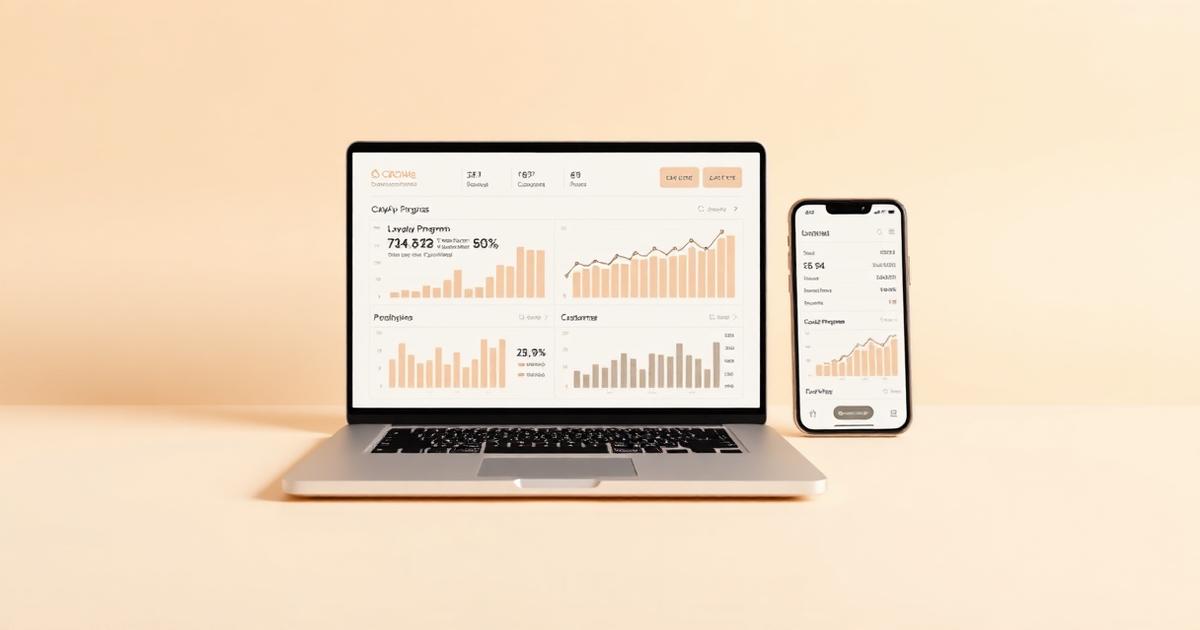
The Loyalty Dashboard Explained: Revenue, Lifetime Value, and Retention Metrics in One Place
See exactly what the WeLoyal dashboard shows: real revenue tied to loyalty, per-customer lifetime value, redemption stats, and membership metrics, with no spreadsheets.
Customer Lifetime Value: What It Means and How a Loyalty Program Actually Increases It
What customer lifetime value means, why it matters more than any single visit, and exactly how a digital loyalty program moves that number in the right direction.