The Membership Card: Turning One-Off Customers Into Predictable Monthly Revenue
WeLoyal membership cards connect to your payment processor to bill customers automatically each month, the way a gym or subscription service does.
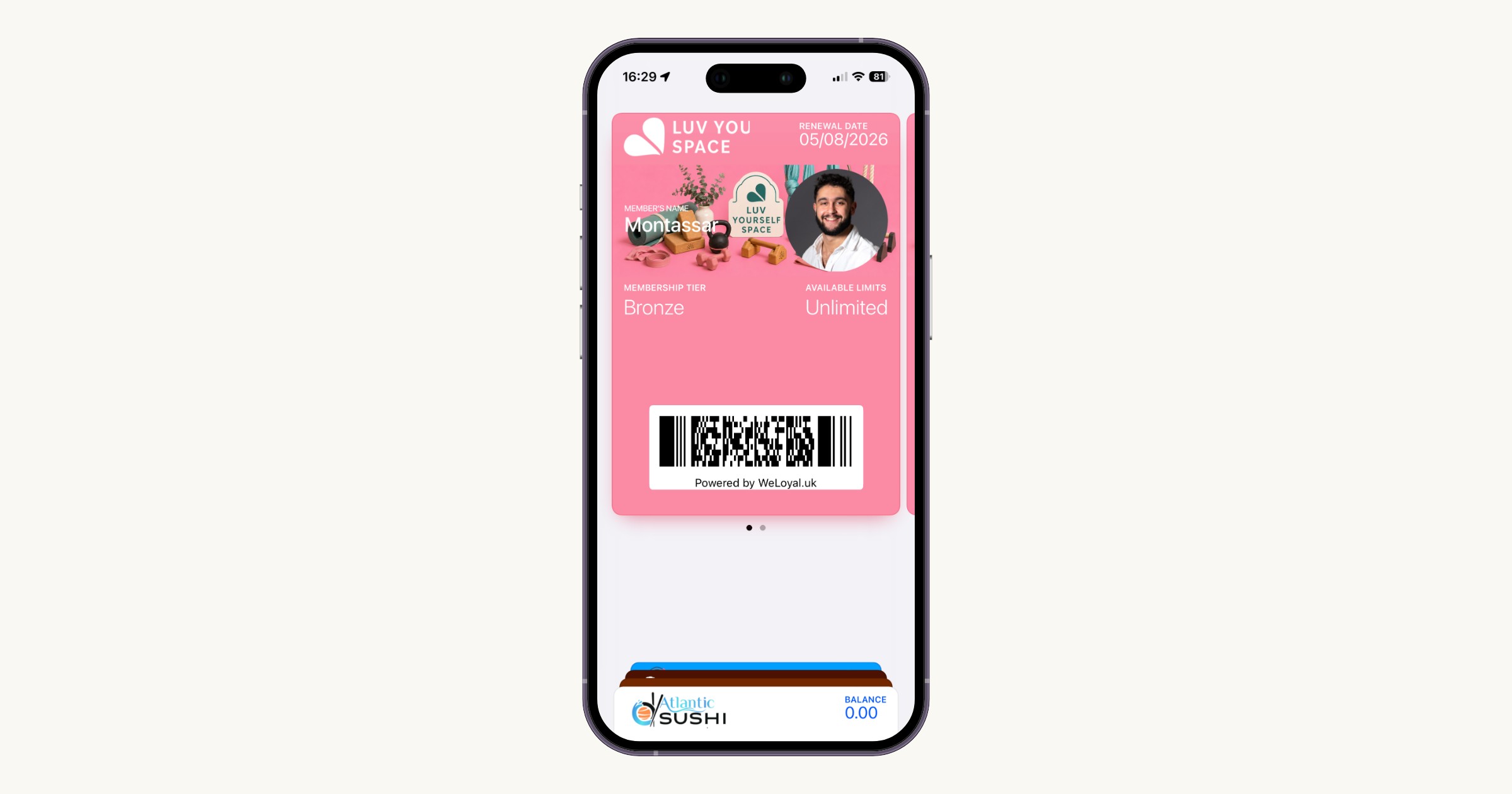
WeLoyal is a digital loyalty card platform that lets businesses run loyalty programs, prepaid packages, and recurring memberships through Apple Wallet and Google Wallet, with no plastic cards, no paper systems, and no separate app for the customer to download. Every card lives in the customer's phone wallet and updates automatically. Of all the card types WeLoyal offers, the membership card is the one built for recurring revenue, connecting directly to a business's own payment processing account so that customers can be billed automatically on a monthly or ongoing basis, in the same way a gym or subscription service operates.
Every other card in this series is, in one way or another, about getting someone to come back. The membership card is different. It's about getting someone to commit before they've even decided to come back, to pay you every month whether they use the service twice or twenty times, the same way a gym or a streaming service does. This is the card built for recurring revenue, and it's genuinely the most powerful one on the platform, because it changes the fundamental shape of your business. Instead of wondering what next month's income will look like, you already know, roughly, because a portion of it is sitting on autopilot, billed automatically to people who've already agreed to pay.
Status first, points second, or not at all
It's worth understanding right away that a membership card doesn't work like the others. There's no stamp, no point balance, no cashback percentage sitting behind it. What a membership represents is simpler and, in a way, more valuable, it represents belonging. The card tells anyone who looks at it that this person is a member, in good standing, entitled to whatever privileges that status carries at your business. Think of an airport lounge. Nobody's collecting stamps to get into the lounge. You either have the membership or you don't, and if you do, the door opens.
That's the model here. A hair salon might reserve its best stylists exclusively for members. A gym might give members access to classes non-members can't book. A wellness studio might give members priority scheduling during busy periods. The card itself, when scanned, simply tells your staff whether that person's membership is currently valid, and if the tier includes a visit allowance, how many of those visits remain for the current period.
There's actually a simpler version of this available too, a free membership card with no tiers, no pricing, and no billing attached at all, useful if what you really want is just a clean way to identify members and log their visits without any of the subscription mechanics layered on top. But the version most businesses are actually interested in, and the one worth spending real time understanding, is the full paid membership, connected directly to automatic billing.
Connecting your own payment processor, and why that decision matters more than it seems
To collect recurring payments, you connect your own account with the payment processor Stripe directly to your loyalty platform. This single decision is one of the more financially significant choices you'll make in setting the whole thing up, and it's worth explaining exactly why.
When you connect your own processing account, every payment a member makes travels a direct path, from their card straight into your account, straight into your bank. The loyalty platform itself isn't sitting in the middle of that transaction taking a cut of every single charge the way some all-in-one membership apps do when they route payment through their own merchant account and quietly mark up the rate along the way. You're paying the standard processing fee that any business accepts for taking card payments, and you're paying for the platform itself as a flat, predictable cost, but you are not paying a hidden percentage on top of every membership charge just because a third party happened to be sitting in the payment flow. Over hundreds of members paying every single month, that difference compounds into real money staying in your business instead of leaking out to a platform fee nobody told you to expect.
Once that connection is in place, the entire billing relationship runs on trusted, industry-standard payment infrastructure, the same infrastructure a huge share of the world's subscription businesses run on. Recurring charges fire automatically on schedule. Failed payments get retried the way any serious subscription business needs them to be. Receipts go out. None of this needs to be built or babysat manually, it simply works, quietly, in the background, the way billing infrastructure should.
Building tiers people actually want to climb
A membership card isn't limited to one flat price. You can build multiple tiers underneath a single card, each with its own name, its own price, its own visit allowance if relevant, and its own list of benefits. A gym might offer a basic tier at a lower monthly price with a capped number of classes, and a premium tier at a higher price with unlimited access plus a few extras like guest passes or priority booking. A salon might separate a standard membership from a VIP one that unlocks its top stylists exclusively.
You decide what each tier includes and what it costs, and once a tier goes live and real members start subscribing to it, that price locks in for anyone already on it. If you decide later to raise prices going forward, existing members keep paying what they originally signed up for, while new members joining after the change pay the new rate. This is simply how serious subscription billing is supposed to work, and it protects the trust you've built with your earliest, most loyal members rather than surprising them with a price hike on something they already committed to.
You're also not required to launch every tier at once. If you're not ready to sell a lower-commitment option like a single day pass, you can simply leave that tier switched off until you're ready, without needing to rebuild anything when you do decide to turn it on.
The small features that make it feel like a proper subscription business
A trial period can be added onto any membership, letting new sign-ups try the tier free for a set number of days before their first charge goes through, a genuinely effective way to lower the barrier for someone who's interested but not quite ready to commit financially on day one. Promo codes can be applied at checkout too, useful for launch discounts, referral incentives, or a limited-time offer to convert people who are still on the fence.
For businesses where the membership includes a visit allowance, that allowance can be tracked and decremented automatically each time a member checks in, resetting cleanly at the start of each new billing period, so nobody has to manually count how many sessions someone's used this month. And because a membership card is fundamentally about identity and status rather than points, you can display the member's own photo directly on the front of their card, letting your front-of-house staff recognize a VIP walking through the door before they've even said a word.
Watching the business you're actually building
Because everything runs through a connected payment account, you get access to the kind of numbers that subscription businesses live and die by, figures most local businesses never get to see about themselves in any organized way. Total revenue generated by the membership program. Monthly recurring revenue, the number that essentially represents your predictable baseline income before a single walk-in customer even shows up. The average lifetime value of a member, and the average revenue you're generating per active subscriber. You can also watch how many new members joined and how many cancelled over any given period, giving you an honest, ongoing read on whether the program is genuinely growing or quietly leaking members out the back.
This is, in a real sense, the closest thing a small business gets to running its own version of a streaming service's dashboard, except instead of tracking subscribers to a show, you're tracking subscribers to your actual physical business.
Where a membership card changes everything
This format is transformative for any business built around ongoing access rather than individual transactions. Gyms and fitness studios, wellness and spa memberships, exclusive service tiers at salons, any subscription box or recurring delivery model, private clubs, co-working spaces, anywhere the value proposition is genuinely "pay us regularly, get access." It's more work to set up properly than a simple stamp card, and it asks more of your customers upfront in terms of commitment, but it's also the only card type on this list that turns your revenue from something you hope happens each month into something you can actually forecast, watch build in real time, and plan a real business around.
Why a digital membership card protects recurring revenue
Recurring revenue is only as strong as your ability to keep the member actually engaged month after month, because a subscriber who quietly forgets why they signed up is a subscriber who eventually cancels, and this is exactly where housing a membership card in a phone's wallet rather than issuing a plastic membership card makes a real difference to retention.
A membership card sitting in Apple Wallet doesn't get left in a car or lost in a drawer the way a plastic membership card so often does. It lives permanently alongside boarding passes and tickets, which means the member's status, their tier, their benefits, their remaining visits for the period, stays visible and top of mind rather than fading out of sight between visits.
That visibility is reinforced by the ability to send that member unlimited push notifications at no per-message cost, which matters enormously for a subscription business specifically. The single biggest driver of cancellations is a member who stops seeing value, and gentle, regular reminders of what their membership includes, a class they haven't tried yet, a benefit they haven't used, cost you nothing extra to send and directly address the reason people quietly let subscriptions lapse.
These notifications land somewhere far more prominent than a typical membership app alert. A wallet-based push appears on the lock screen exactly the way a text message does, ahead of the pile of app notifications people have mostly trained themselves to ignore. And unlike most membership apps, which require a download, an account, and a password before a member even sees their first benefit, installing a membership card here takes one scan and one tap, with the member seeing their status immediately afterward.
Geo-triggered notifications add something particularly valuable for membership businesses built around a physical location. If a member with an active membership and unused visits for the month walks near your gym or studio, their phone can trigger an automatic reminder right at the moment they're close enough to actually walk in and use what they're already paying for, no manual outreach required.
Underneath all of this, RFM analysis is constantly tracking each member by how Recently they've checked in, how Frequently they use their membership, and effectively how much value they're extracting relative to what they're paying. This is one of the most powerful applications of this kind of segmentation, because it lets you spot a member drifting toward cancellation long before they actually cancel. A member who hasn't checked in for three weeks can automatically trigger a re-engagement message, sometimes with a small incentive to come back, while your most engaged members, the ones checking in every week without fail, can be recognized in a way that reinforces why they're glad they signed up in the first place.
This directly protects and grows the single most important number in a subscription business, which is lifetime value per member. A member who feels genuinely seen and reminded of their benefits sticks around measurably longer than one who's left to remember on their own, and every extra month a member stays active compounds directly into your monthly recurring revenue. The dashboard behind the card makes all of this concrete rather than theoretical, showing you real monthly recurring revenue, average revenue per member, lifetime value figures, and exactly how many members joined versus cancelled over any period you choose, giving you the same kind of clear financial visibility a much larger subscription business would expect to have into its own numbers.
Best suited for businesses with:
- A subscription or ongoing-access business model
- A desire for predictable, recurring monthly revenue
- Different tiers of access, benefits, or pricing to offer
Example businesses:
- Gyms and fitness studios
- Wellness centers and spas offering membership tiers
- Salons with VIP or exclusive-stylist tiers
- Subscription boxes and recurring delivery services
- Private clubs and members-only venues
- Co-working spaces
What a membership card is good at:
- Billing customers automatically through a directly connected payment account, avoiding extra platform markups on every charge
- Supporting multiple pricing tiers, each with its own benefits and visit allowances
- Offering free trial periods to lower the barrier to signing up
- Giving staff instant visibility into whether someone's membership is currently active
- Providing real subscription-business metrics like monthly recurring revenue, lifetime value, and churn
What it's not built for:
- Simple one-off purchases or occasional visits (better suited to a stamp or reward card)
- Businesses not ready to take on recurring billing and subscription management
- One-time promotional offers for new customers (better suited to a coupon card)
Explore the other WeLoyal card types
This card is one of eight built into WeLoyal. If you are still deciding which mechanic fits your business, our full guide on the 8 WeLoyal card types compares them side by side, or read what WeLoyal is for the wider retention picture. You can also see every card type live in the card types section of our homepage.
Read more
How Recurring Membership Billing Works With Stripe, and Why It Costs Less Than You Think
How WeLoyal membership billing works with your own Stripe account: payments go straight from customer to business with no extra platform fee layered on every charge.
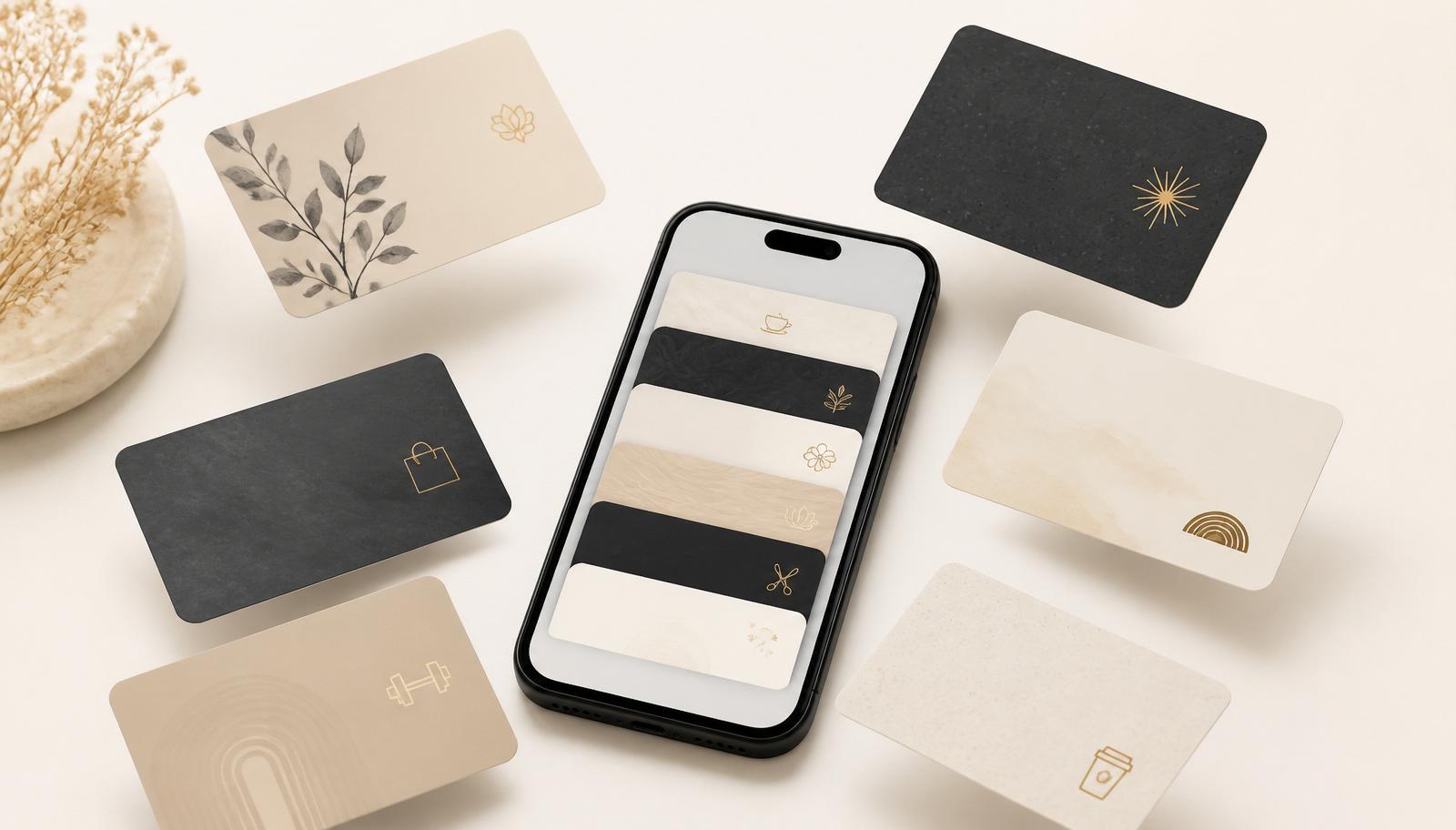
The 8 WeLoyal Card Types Explained: A Complete Deep-Dive
A deep-dive into all 8 WeLoyal card types: stamp, multipass, cashback, discount, reward, gift, coupon, and membership with Stripe recurring billing.

Digital Loyalty Cards for Coworking Spaces: Managing Members, Day Passes, and Recurring Revenue in One Place
How WeLoyal helps coworking spaces manage day passes, visit bundles, and full recurring memberships in one system, delivered straight to Apple Wallet and Google Wallet.