The Discount Card: Loyalty Without Making Anyone Do the Math
WeLoyal discount cards give loyal customers an automatic price reduction that climbs as they spend, with no points balance to track or redeem.
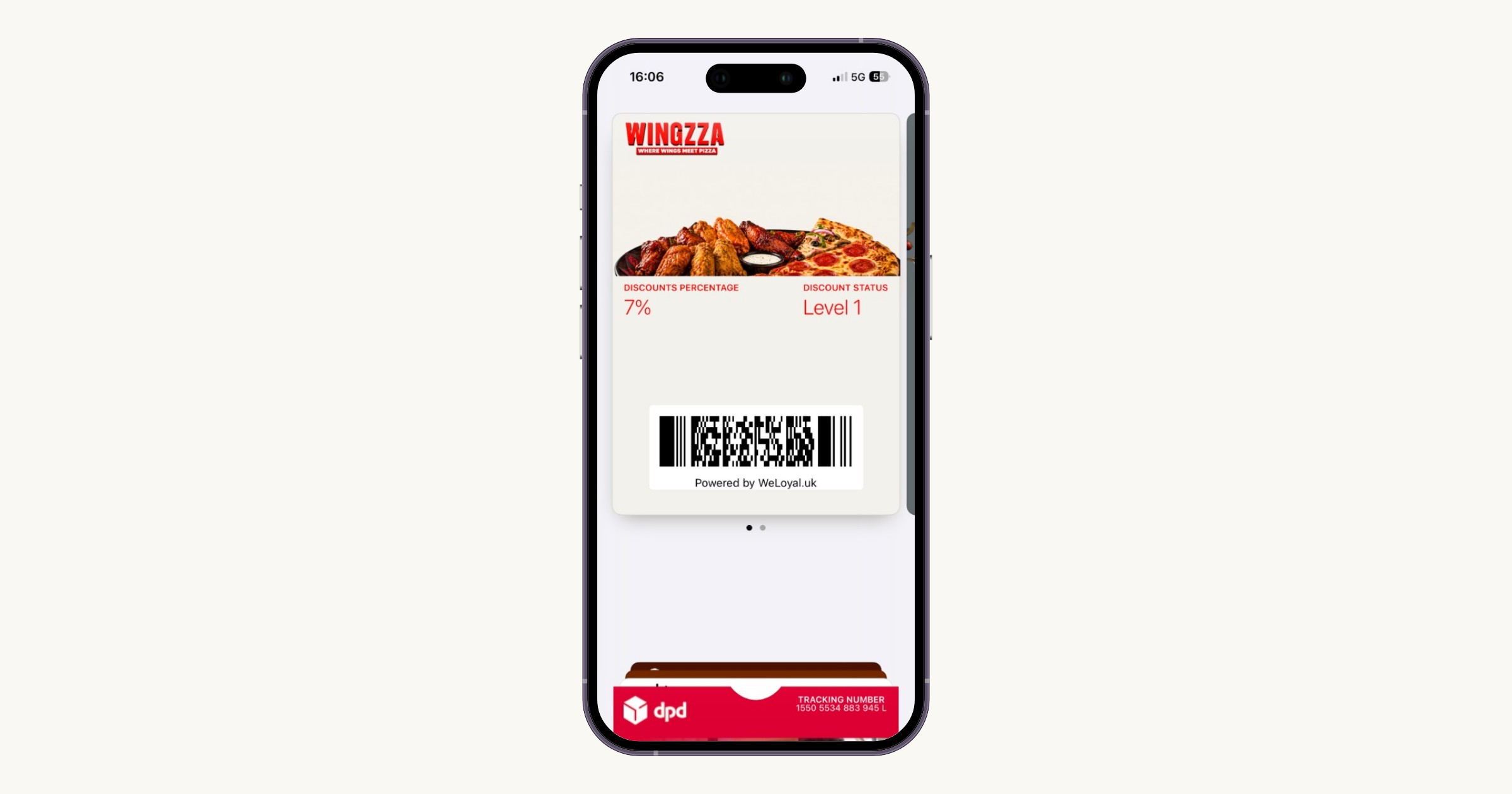
WeLoyal is a digital loyalty card platform that lets businesses build and run customer reward programs through Apple Wallet and Google Wallet, replacing paper stamp cards, plastic loyalty cards, and standalone loyalty apps with one digital card customers keep on their phone. No app download is required, no plastic needs printing or replacing, and every visit updates the card automatically. Among the card types available on WeLoyal, the discount card is designed for businesses that want to reward loyal customers with a simple, automatic price reduction rather than a points balance customers have to actively manage and remember to redeem.
Some customers love collecting points. They enjoy checking their balance, deciding when to cash it in, treating it almost like a small savings account they're slowly building up. Other customers find that entire process tedious. They don't want to track a balance or figure out what their points convert to, they just want to know that the longer they stick with a business, the less they pay, full stop, no extra steps. The discount card exists for that second kind of customer, and honestly, for a lot of businesses too, since it removes an entire layer of complexity from the loyalty experience on both sides of the counter.
Where a cashback card gives someone a balance to spend down over time, a discount card skips the balance entirely. Instead, the more a customer spends with you over the course of their relationship, the higher their standing discount climbs, and that discount just applies automatically at checkout from that point forward. No points, no redemption step, nothing to remember. Show the card, get the rate you've earned, done.
A ladder, not a balance
The structure underneath a discount card looks a lot like the tier system in a cashback program, but the outcome is different in a way that matters. You set up tiers based on how much a customer has spent with you cumulatively, and each tier carries a fixed discount percentage. A new customer might start with no discount at all, or a small five percent, and as their lifetime spending crosses defined thresholds, they climb into higher tiers automatically, unlocking bigger and bigger discounts as they go.
The important difference from cashback is that there's nothing to spend down. The discount isn't a reward waiting to be redeemed later, it's simply the price the customer pays right now, adjusted automatically based on their standing with your business. A gold-tier customer doesn't need to remember to use their points before they expire, doesn't need to ask if they have enough saved up, and doesn't need to do any mental math at the till. Their price is just already lower, every time, because of who they are to your business by now.
This makes the discount card feel less like a game and more like genuine status. It communicates, quietly and consistently, that a long-standing customer is worth more to you than a stranger walking in for the first time, and it does that without ever making the customer work for the recognition.
Why removing the redemption step actually matters
It's easy to underestimate how much friction a redemption step adds to a loyalty program, but think about how many point balances you personally have sitting unused somewhere right now, forgotten across coffee shops and supermarkets and airlines, because remembering to actually use them at the right moment turned out to be more effort than most people bother with. A discount card sidesteps that entire failure point. There's no moment where the customer has to remember anything or make an active choice. The benefit is just already applied the second the card gets scanned, which means it always gets used, every single time, by definition.
This also makes life easier behind the counter. Staff don't need to ask whether someone wants to redeem points or explain a conversion rate, they just apply whatever discount the tier calls for and move on. For a busy till during a rush, that simplicity is worth more than it might seem on paper.
Building a tier ladder that actually motivates people
You can create up to six tiers, giving you room to design a genuine journey rather than a single flat discount that never changes. A common approach is to start new customers with something modest, maybe five percent off once they've spent their first fifty or so, then build toward more meaningful discounts, perhaps fifteen or even twenty percent, reserved for customers who've clearly made your business a habit rather than a one-off. The exact thresholds and rates are entirely up to you, and they should reflect what actually makes sense for your margins, but the principle holds everywhere, give people a visible ladder to climb and they tend to climb it.
Where a discount card fits naturally
This format tends to work best in businesses where customers are already price-sensitive and where a clean, simple percentage off feels more valuable than an abstract points balance. Hair and beauty salons, casual dining, everyday retail, service businesses like dry cleaning or auto repair, anywhere the customer relationship is built on regular, predictable visits and the biggest thing you can offer a loyal customer is simply a better price than everyone else gets. It's the loyalty mechanic for businesses that want to reward tenure without asking their customers to become accountants about it.
Why a digital discount card stays effective long after signup
A discount card only works if the customer still has it and your staff can see it the moment they walk in, and that's exactly the problem a plastic card quietly fails at over time, worn out, left at home, or simply thrown away once the novelty wears off.
Put that same card in Apple Wallet instead, and it becomes something that genuinely doesn't get lost. It sits alongside boarding passes and tickets in the one part of a phone people actually keep track of, which means the discount tier a customer worked their way up to stays visible and usable indefinitely, rather than becoming worthless the moment a physical card goes missing.
Because the card lives in the wallet, you also gain the ability to message that customer as often as makes sense, with no per-message cost standing in your way the way SMS pricing usually does. For a discount program, this matters because customers genuinely forget which tier they're on, and reminding them what their current discount actually is, or how close they are to the next tier, is one of the simplest ways to get them back through the door.
These messages land in a genuinely different place than an app notification does. A wallet push shows up on the lock screen the same way a text message would, ahead of the pile of app alerts most people barely glance at anymore. And getting a customer to that point never required them to download a single thing. A quick QR scan, one tap, and the card is simply installed, no app store, no account, no password to lose later.
Location-based alerts turn this into something even more immediate. Set a location near your business, and the moment a cardholder walks within range, their phone can trigger a notification automatically, without you doing anything manually. A customer sitting at a high discount tier who happens to be walking past can get a timely reminder of exactly what rate they're entitled to, right at the moment they're close enough to actually use it.
Underneath the surface, RFM analysis is quietly working to sort your customer base by how Recently they visited, how Frequently they come in, and how much they typically spend. This means you're not treating every customer identically. A long-time customer at your highest discount tier who hasn't been in for a while can automatically receive a different message than someone who just joined last week, and your most consistent regulars can be recognized in a way that actually reflects how much they've spent building up to that tier in the first place.
Put together, this steadily raises what each customer is actually worth to your business over time, because a person who feels genuinely recognized for their loyalty keeps choosing you over a competitor rather than drifting away. And you don't have to take that on faith, because the dashboard tied to the card shows you real figures, exactly how much revenue is coming from each tier, how customers are climbing between tiers over time, and what the discount program is truly costing versus what it's bringing back in repeat business.
Best suited for businesses with:
- Price-sensitive, regular customers
- A preference for simplicity over a points-based system
- Staff who need the reward to apply instantly with no extra steps at checkout
Example businesses:
- Hair and beauty salons
- Casual dining and cafés
- Everyday retail and convenience stores
- Dry cleaners
- Auto repair and servicing shops
- Pharmacies and health stores
What a discount card is good at:
- Removing the redemption step entirely, so the benefit is never forgotten or wasted
- Making loyalty feel like status rather than a game
- Keeping checkout fast, since staff just apply the tier discount and move on
- Rewarding long-term customers automatically without manual tracking
What it's not built for:
- Businesses that want customers to actively save up and spend a balance (better suited to a cashback card)
- Businesses that want to sell prepaid bundles or ongoing subscriptions (better suited to a multipass or membership card)
Explore the other WeLoyal card types
This card is one of eight built into WeLoyal. If you are still deciding which mechanic fits your business, our full guide on the 8 WeLoyal card types compares them side by side, or read what WeLoyal is for the wider retention picture. You can also see every card type live in the card types section of our homepage.
Read more
The Stamp Card: Why the Oldest Loyalty Trick Still Works Best
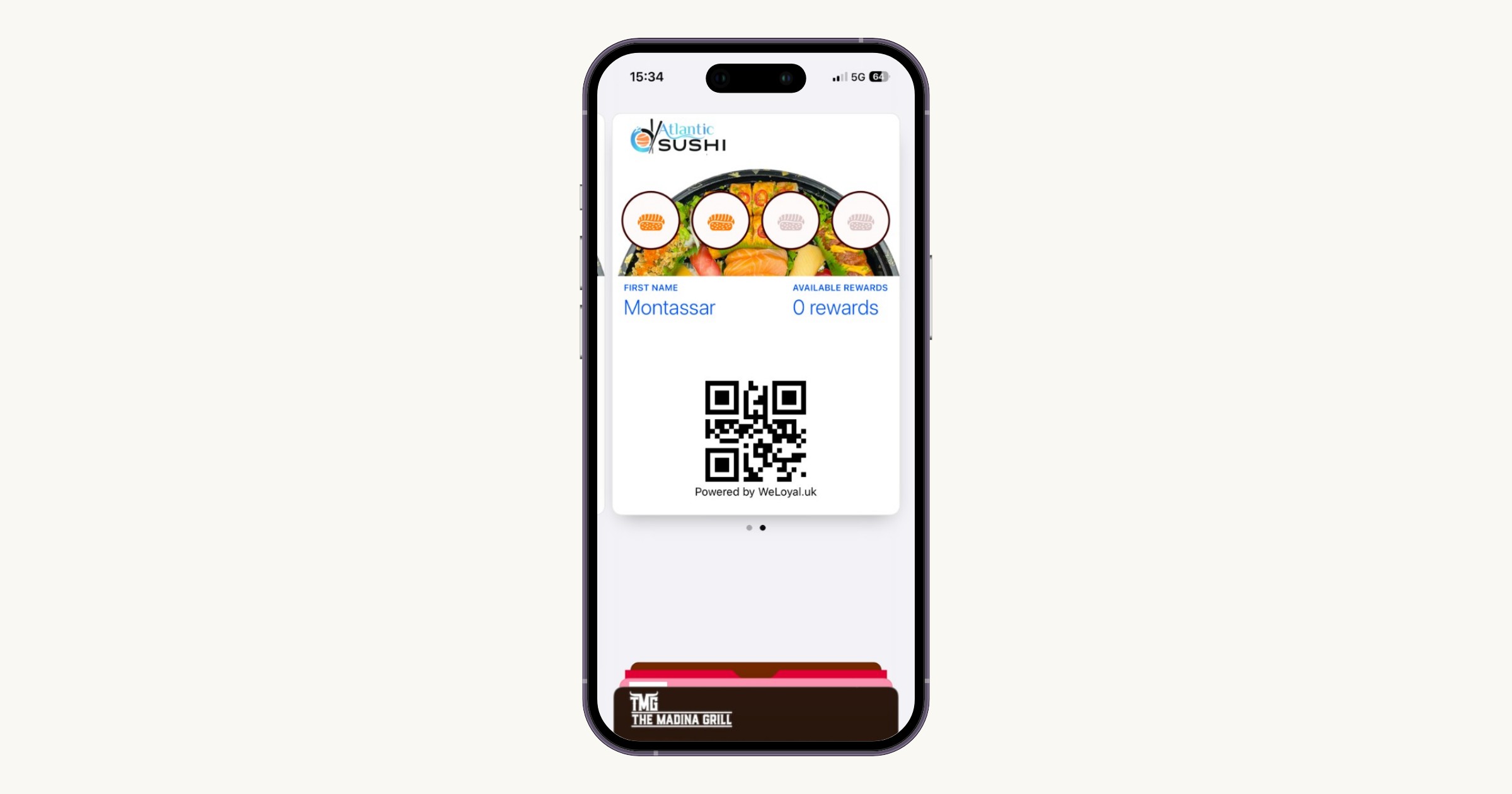
How WeLoyal digital stamp cards work: buy-x-get-one-free rewards in Apple Wallet and Google Wallet, with expiring stamps, referrals, and push notifications.
The Coupon Card: The First Handshake With a Customer You Haven't Met Yet
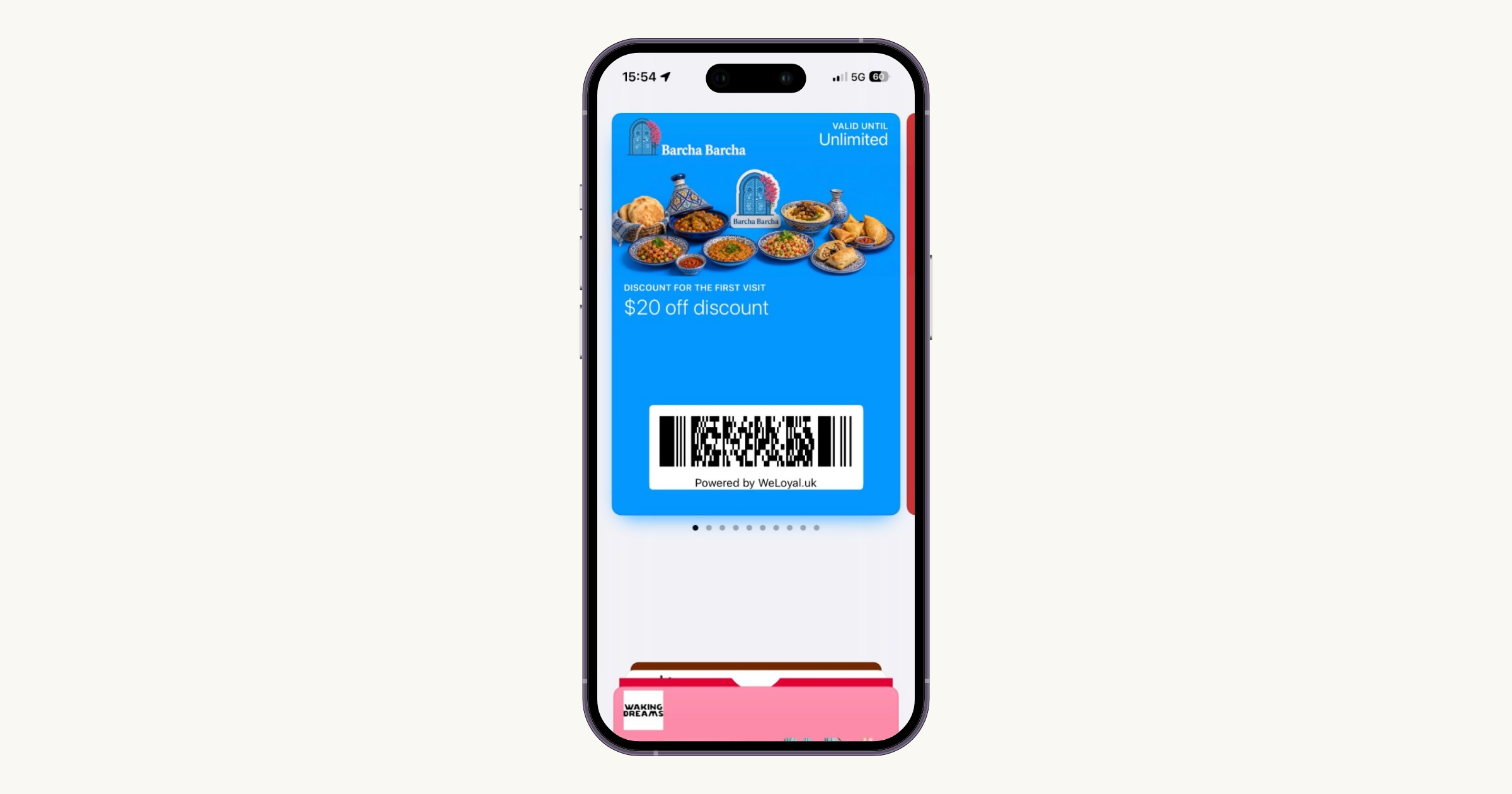
WeLoyal coupon cards turn a one-time first offer into a lasting relationship, installed from an ad or flyer and linked into your ongoing loyalty program.
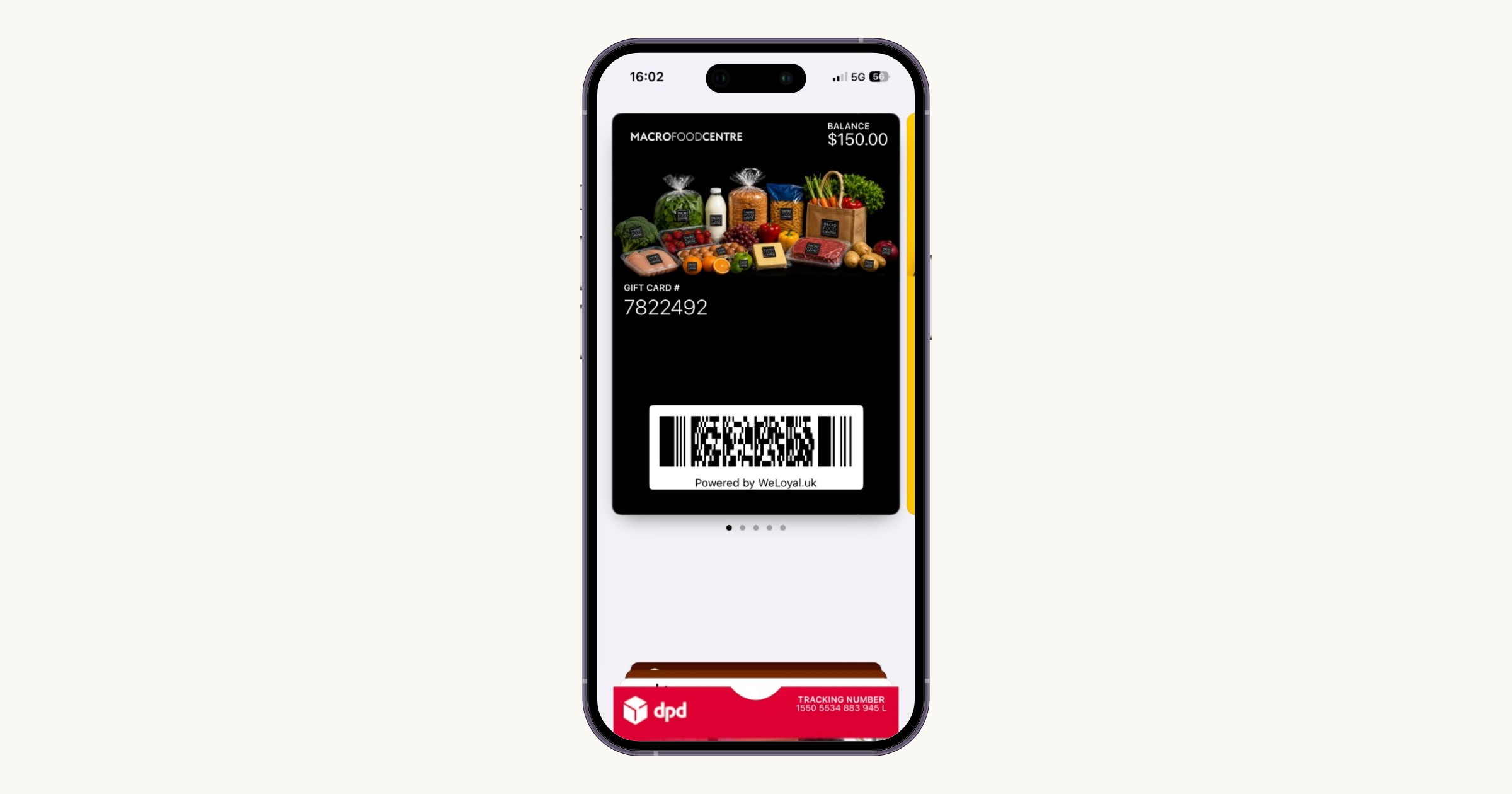
The Gift Card: Turning a Present Into a New Customer
WeLoyal digital gift cards let one person buy a prepaid balance and send it to someone else, installed straight into Apple Wallet or Google Wallet.