The Multipass Card: Getting Paid Before You Deliver the Service
Sell class packs, treatment bundles, and prepaid visits with WeLoyal multipass cards. Customers pay upfront and the balance counts down live in their wallet.
WeLoyal is a digital loyalty card platform that helps businesses run customer rewards, prepaid packages, and memberships directly through Apple Wallet and Google Wallet, without paper cards, plastic cards, or a separate app for customers to download. Businesses set up a card once, customers add it to their phone's wallet in a few seconds, and every purchase or visit after that is tracked automatically. Among WeLoyal' card types, the multipass card is built specifically for businesses that sell bundles of visits or sessions upfront, such as class packs, treatment packages, or multi-wash bundles.
Every business that sells sessions rather than products eventually runs into the same problem. A yoga studio, a physio clinic, a beauty salon, a car detailing shop, all of them live on repeat visits, but chasing payment one visit at a time is exhausting, both for the business and for the customer who has to keep pulling out their card every single time. The multipass solves this by flipping the order entirely. The customer pays once, upfront, for a bundle of visits, and then simply shows up and uses them until they run out.
This isn't a new idea. Gyms have sold ten-class packs for years, punch cards for parking garages have existed forever, and every serious spa has some version of a prepaid package sitting on its price list. What WeLoyal does is take that same proven idea and put it directly into a customer's phone, so instead of a paper voucher that gets lost in a bag or a spreadsheet you're manually tracking at the front desk, the balance lives on a digital card that updates itself the moment your staff scans it.
How the balance actually works
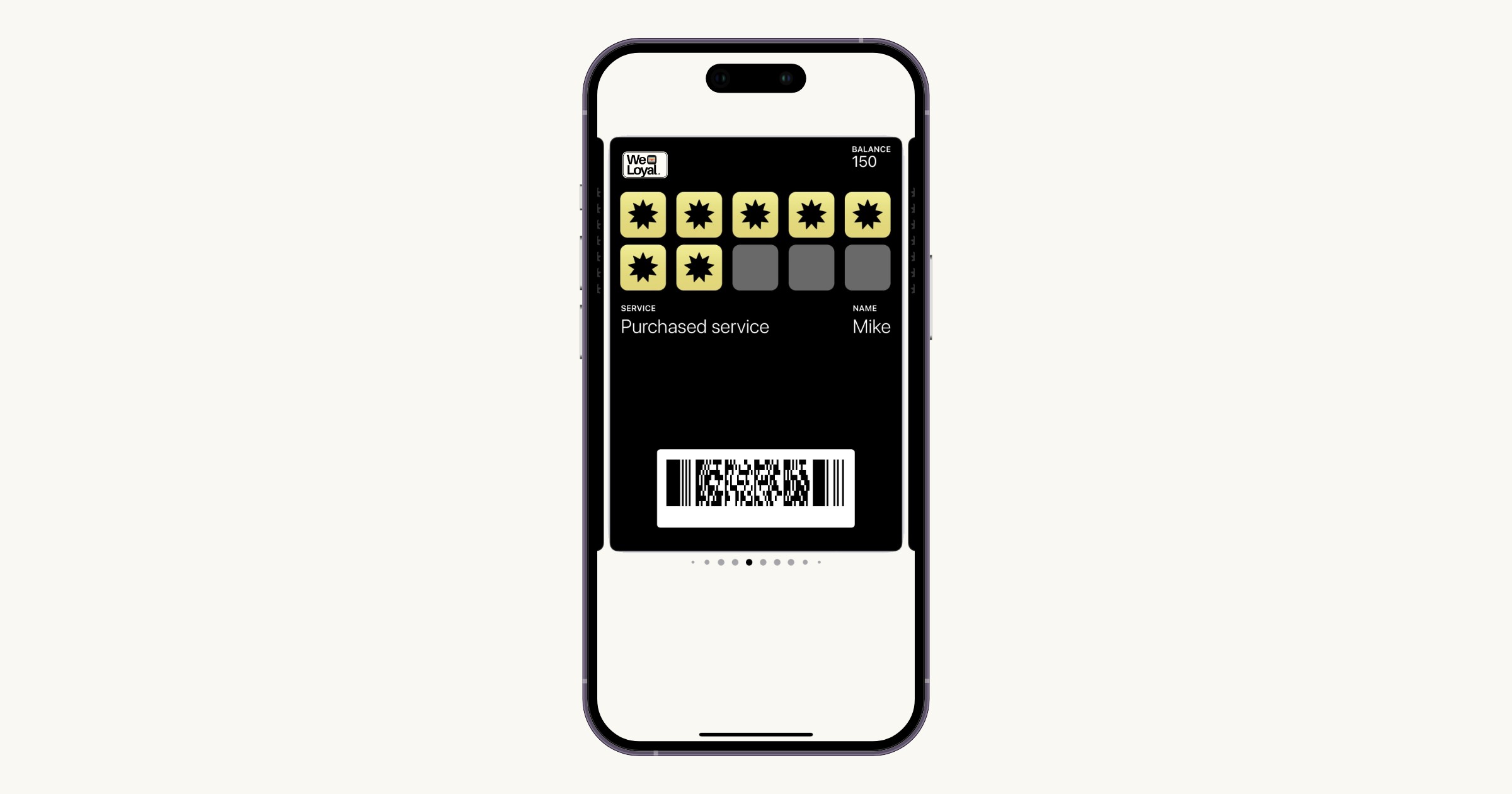
At its core, a multipass is a countdown rather than a build-up. Where a stamp card fills up toward a reward, a multipass starts full and empties out with use. You set a total number of visits available on the card, and as your customer uses each session, one gets deducted, live, right there on their phone. If someone buys a ten-visit package, they see ten active marks on their card. Use one, and it flips to used. Simple, visual, no explanation required.
What makes this genuinely flexible is that the card can be built to hold more capacity than any one customer buys. You might design the card template to support up to fourteen visits, but sell most customers a ten-visit package. The extra four spaces stay inactive and invisible in practice, quietly waiting there in case that same customer decides to top up later, or in case you want to run a bigger fifteen-visit promotion off the same design without starting from scratch.
You can layer a second reward system directly on top of the visit count too. Alongside deducting a visit each time, the same card can also hand out points for every session, points the customer can later put toward something unrelated to the core service. A yoga studio might give a class credit for the visit itself, plus a small point balance that eventually turns into a free branded water bottle or a discounted workshop. It's two loyalty mechanics running on one card, which is more sophisticated than it sounds and genuinely difficult to pull off with anything paper-based.
What your staff actually sees and does
When a customer walks in and shows their card, your team scans it and the system displays exactly where that person stands. How many visits they've used, how many they have left, and when they last came in. If a mistake happens, and mistakes always happen eventually, a visit gets deducted by accident or a customer insists they should have more remaining than the card shows, correcting it takes seconds. Your staff can add or subtract visits directly from that customer's profile, log the reason if they want a record of it, and move on. Nothing about it requires a manager override or a phone call to support.
Behind the scenes, the platform is quietly building a real picture of that customer's value to your business. It tracks how many visits they've purchased in total across every top-up, how many they've actually redeemed, and it calculates a running lifetime value figure based on what they've spent. Over time this turns into genuinely useful information, letting you see which customers are your most loyal regulars long before they'd ever tell you themselves.
Why prepaid changes the relationship, not just the accounting
There's a psychological shift that happens the moment someone pays for ten sessions instead of one. They've made a commitment, even if it's a small one, and that commitment tends to translate directly into them actually showing up. A customer who's already paid for a block of massages is far more likely to keep booking them than someone who has to make a fresh purchase decision every single week. You get the cash flow benefit of collecting revenue upfront, and you get the retention benefit of a customer who now has a reason to keep coming back until that balance hits zero.
It also removes a surprising amount of friction from the actual visit. Nobody wants to fumble with a wallet or tap a card reader before every ten-minute nail appointment. With a multipass already loaded, the entire transaction at the counter becomes a two-second scan, and the customer walks out the door having barely broken stride.
Where this format earns its place
Multipass cards make the most sense anywhere a business sells access to a limited number of sessions rather than a single one-off purchase. Yoga and pilates studios selling class packs. Physiotherapy and chiropractic clinics selling treatment bundles. Beauty and grooming businesses selling multi-visit packages for things like waxing or facials. Car detailing services selling a set number of washes. Anywhere the natural sales unit is "a bundle of these," a multipass turns that bundle into something the customer can see, track, and actually want to finish using, rather than a receipt that gets buried and forgotten.
Why a digital multipass keeps working long after the sale
When someone pays upfront for ten sessions, the last thing you want is for that commitment to quietly fizzle out because they lost track of what they'd bought. This is where moving the card into a phone's wallet does something a paper punch card or a spreadsheet booking system never could.
A multipass sitting in Apple Wallet simply cannot be misplaced the way a paper voucher can. It's stored in the same part of the phone as boarding passes and event tickets, a place people don't lose things, which means the ten or twenty sessions someone paid for actually get used rather than half-forgotten after visit three. For a business, that's the difference between a package that gets fully redeemed, sometimes even topped up again, and one that quietly becomes a liability sitting unused on your books.
Because the card lives in the wallet rather than inside a separate app, you're also able to send that customer push notifications at no per-message cost, and there's no cap on how many you send. That matters enormously for a prepaid package, because the businesses that get the most value from a multipass are the ones that actively remind people to come back and use what they've already paid for. A client with six sessions still sitting unused isn't a lost cause, they're simply someone who hasn't been reminded yet, and reminding them costs you nothing extra.
These reminders also land differently than anything coming from a downloaded app. A wallet notification shows up the same way a text message does, right on the lock screen, ahead of the pile of app notifications most people have learned to ignore. And getting to that point required nothing from the customer beyond a single QR scan. No app store, no account creation, no password to forget, just an install that takes seconds and a card that's simply there afterward.
Location-based alerts add another layer that's particularly well suited to session-based businesses. If a customer with unused visits on their multipass walks near your studio or clinic, you can trigger an automatic notification the moment they're physically close enough to actually act on it, no manual sending required. Someone who booked a ten-class pack and hasn't been in for a couple of weeks might get a nudge exactly as they're walking past on their way somewhere else, at precisely the moment a reminder is most likely to turn into a booked class.
Underneath all of this, the system is quietly tracking behavior using RFM analysis, sorting customers by how Recently they've used a visit, how Frequently they book, and how much they typically spend across their packages. This lets you build automated responses tailored to where each customer actually sits. Someone who bought a ten-pack and has barely touched it can be automatically flagged for a re-engagement nudge, while someone who burns through every pack within weeks and keeps buying more can be recognized as a top client and treated accordingly, maybe offered first access to a new class or an early renewal discount before their balance even hits zero.
The end result of all this attention is a customer who keeps coming back to finish what they started, and who's genuinely more likely to buy another package once the first one runs out, because the experience felt cared for rather than transactional. And it isn't guesswork. The dashboard behind each multipass shows you exactly how much a given customer has spent across every package they've bought, how quickly they're using their sessions, and what their redemption pattern actually looks like, giving you real numbers on lifetime value instead of a rough sense that "regulars are probably worth more."
Best suited for businesses with:
- Session-based or appointment-based services sold in bundles
- A need to collect payment upfront rather than per visit
- Customers who visit regularly over a set window of time
Example businesses:
- Yoga, pilates, and fitness studios selling class packs
- Physiotherapy, chiropractic, and massage clinics
- Beauty and grooming businesses selling multi-visit packages
- Car washes and detailing services
- Tanning and wellness studios
- Tutoring and coaching services sold in session blocks
What a multipass card is good at:
- Collecting revenue before the service is delivered, improving cash flow
- Locking in repeat visits since the customer has already paid
- Removing the need to process payment at every single visit
- Letting one card design support several different package sizes
What it's not built for:
- Open-ended, unlimited access (better suited to a membership card)
- Businesses where purchase amount varies more than visit count
- One-time promotional offers for new customers (better suited to a coupon card)
Explore the other WeLoyal card types
This card is one of eight built into WeLoyal. If you are still deciding which mechanic fits your business, our full guide on the 8 WeLoyal card types compares them side by side, or read what WeLoyal is for the wider retention picture. You can also see every card type live in the card types section of our homepage.
Read more
Digital Loyalty Cards for Chiropractors: Keeping Patients on Their Treatment Plan
How WeLoyal helps chiropractic and physical therapy practices keep patients consistent with treatment plans, collect for packages upfront, and follow up with drop-offs.
The Gift Card: Turning a Present Into a New Customer
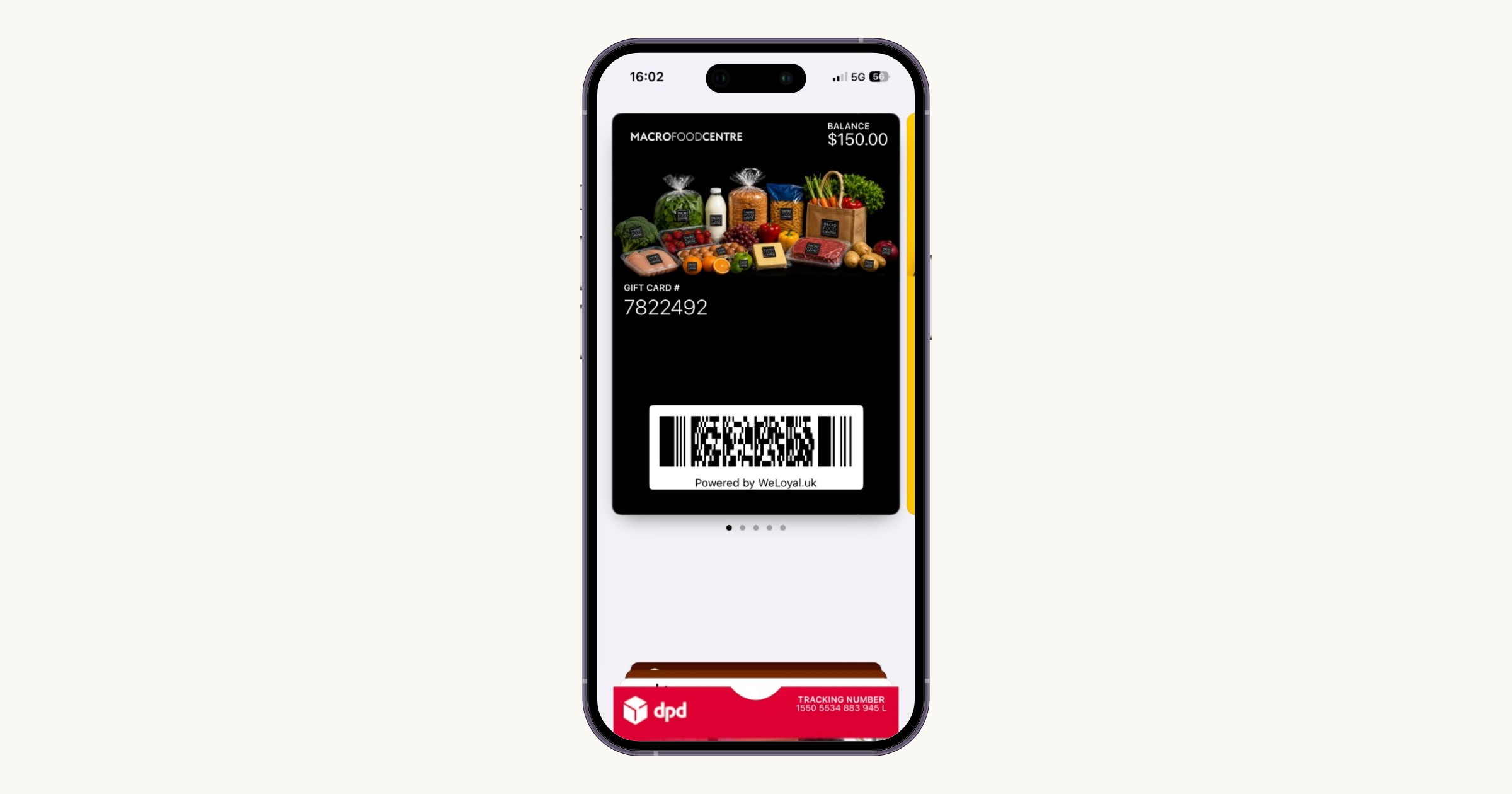
WeLoyal digital gift cards let one person buy a prepaid balance and send it to someone else, installed straight into Apple Wallet or Google Wallet.
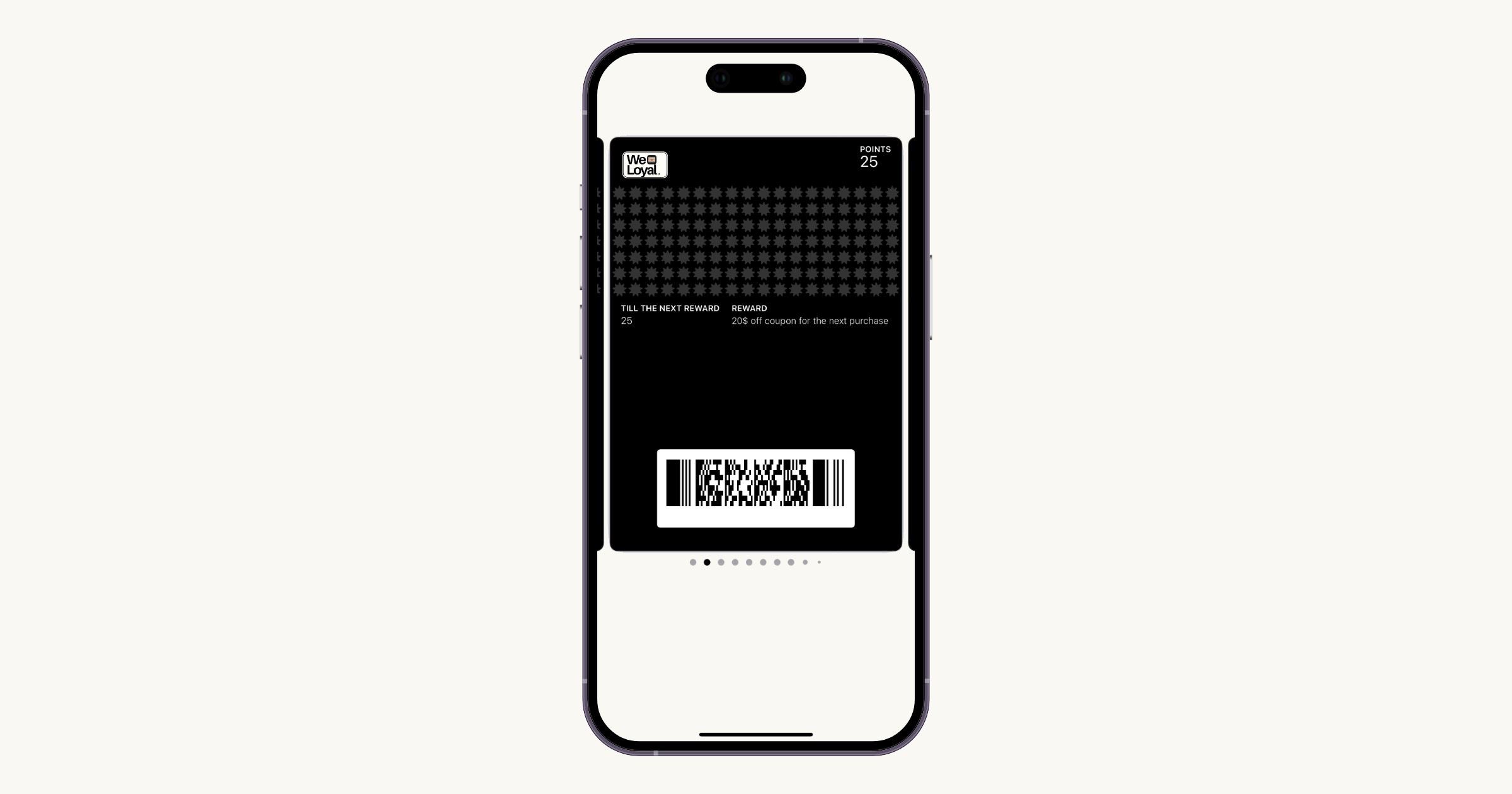
The Reward Card: One Points System, Built to Bend Around Your Business
The most flexible WeLoyal card type: a points system you can tie to spend, visits, or manual actions, and reshape later without losing customers.