The Reward Card: One Points System, Built to Bend Around Your Business
The most flexible WeLoyal card type: a points system you can tie to spend, visits, or manual actions, and reshape later without losing customers.
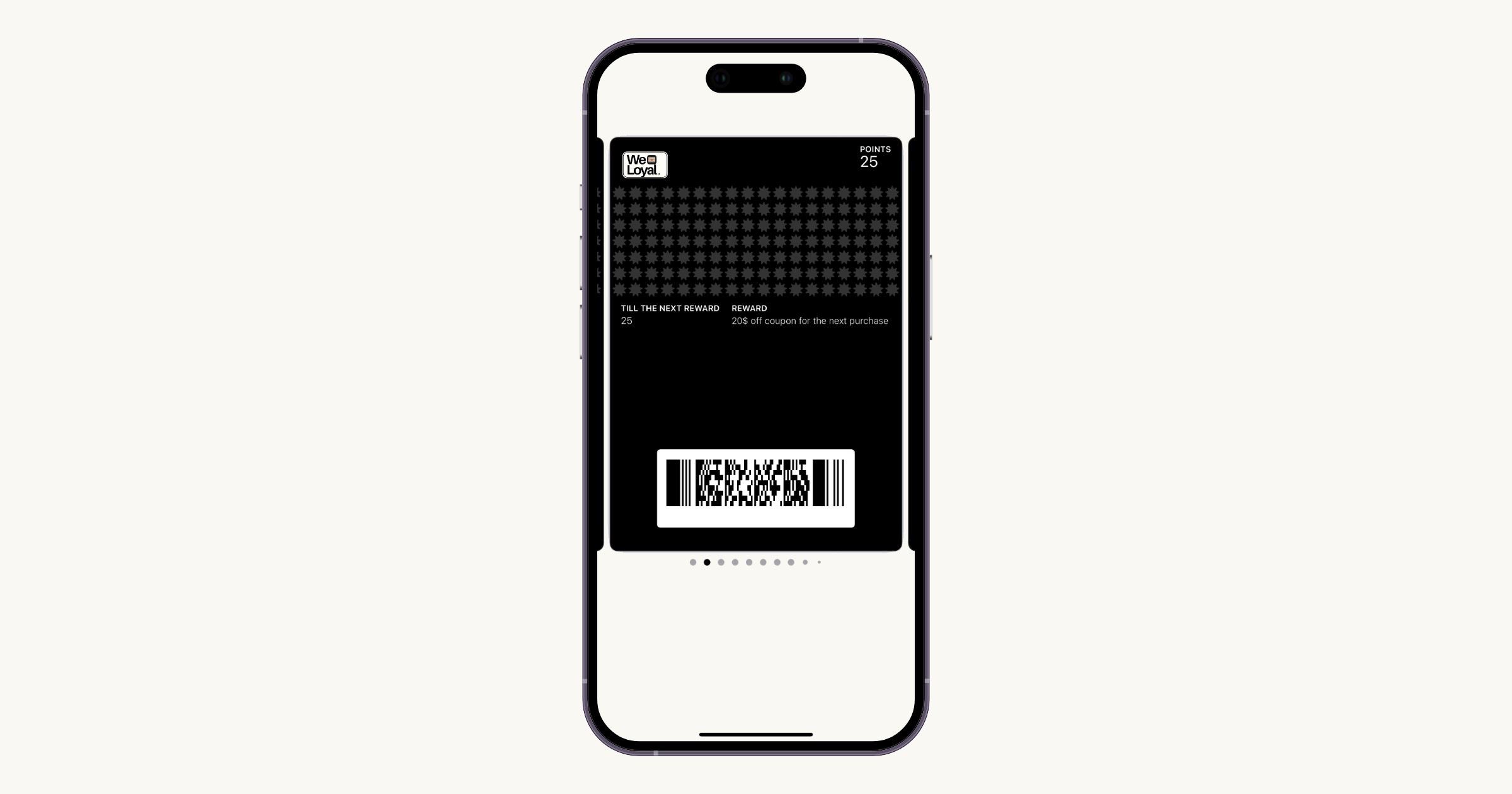
WeLoyal is a digital loyalty card platform that helps businesses design and run customer loyalty programs directly inside Apple Wallet and Google Wallet, without paper punch cards, plastic loyalty cards, or a dedicated app customers need to download. Cards are built once, installed by customers in seconds via a QR code, and updated automatically with every visit or purchase. Among WeLoyal' card types, the reward card is the most flexible points-based option, built for businesses whose loyalty needs don't fit neatly into one fixed mechanic like a stamp card or a flat percentage discount.
Most loyalty cards make you commit to one way of thinking from the very beginning. A stamp card only counts visits or purchases toward one fixed goal. A cashback card only works in percentages. A discount card only ever gives a price reduction. Real businesses, though, don't always fit neatly into one box, and sometimes you don't even know yet exactly how you want to reward people until you've been running the program for a few months and seen what your customers actually respond to. The reward card exists for that situation. It's the most open-ended of all the card types, a general points system you can shape around whatever makes sense for your business, and reshape later if your mind changes.
Choosing how points get earned, without locking yourself in
When you set up a reward card, you pick one of three ways points get earned. Points can be tied to how much a customer spends, so bigger purchases earn more, similar in spirit to how cashback works. They can be tied to visits, so every check-in earns the same fixed amount regardless of purchase size, similar to how a stamp card behaves. Or points can be awarded more freely, letting you or your staff hand them out for whatever specific action actually matters to your business, whether that's a particular product, a referral, filling out a survey, or anything else you want to recognize.
What makes this genuinely different from the other card types is that you're not stuck with your first decision. If you launch with a spend-based system and later realize a visit-based approach actually fits your customers better, you can switch the underlying mechanic, even after people have already installed the card and started earning points. That kind of flexibility doesn't exist on a stamp card, where the core structure locks in the moment real customers start using it. Here, the reward card is built to evolve alongside your understanding of what your program actually needs to do.
Points that don't disappear the moment you earn something
There's a small but meaningful detail in how reward cards handle the moment a customer actually reaches a reward. On many points systems, hitting a milestone resets your balance back to zero, which can feel a little deflating even as you're being handed something you earned. A reward card doesn't do that. When a customer accumulates enough points to unlock a reward, that reward becomes available to them while their underlying point balance stays exactly where it was. Nothing gets wiped out. They can claim what they've earned and keep building toward whatever comes next without ever feeling like they're starting over from scratch.
You're also not limited to a single reward sitting at the end of some long grind. As many rewards as make sense for your business can exist inside the same card, at whatever point thresholds you choose, giving customers multiple things to aim for rather than one distant finish line.
Like the other point-based cards, you can set an expiry on how long points remain valid once earned, with each point running its own individual countdown from the moment it was credited, which keeps the whole balance sheet of your loyalty program from becoming an open-ended liability that never resolves.
A points system that adapts to how you actually run your business
Because a reward card doesn't force a single rigid interpretation of what "earning" means, it tends to suit businesses that don't have one single, clean transaction type. A gym might want to reward both attendance and specific class bookings. A wellness studio might want to reward spend on retail products differently than spend on treatments. A multi-service business, somewhere offering several genuinely different things under one roof, often struggles to force all of that into a stamp card's single fixed reward or a cashback card's flat percentage. A reward card gives you the room to build a points economy that actually reflects how varied your business really is.
It also works well for businesses that are still figuring out their loyalty strategy and don't want to commit permanently to one mechanic before they've seen real customer behavior. Launching with something flexible, watching how people actually engage with it, and adjusting the underlying earning rule later without having to relaunch an entirely new card is a real advantage most loyalty formats simply don't offer.
Where this format earns its place
Reward cards make the most sense for gyms and fitness studios with multiple types of engagement to recognize, wellness and multi-service businesses that don't fit a single transaction pattern, and any business that wants the credibility of a proper points program without being boxed into one narrow way of awarding it. If your business genuinely does one simple thing over and over, a stamp card will probably serve you better. But if your business is a bit more layered than that, and you want a loyalty program with room to grow alongside you, a reward card gives you exactly that kind of space.
Why a digital reward card stays relevant as your program evolves
A flexible points system is only as good as the business's ability to actually stay in touch with the people earning those points, and this is where housing the card in a phone's wallet rather than a plastic version genuinely changes what's possible.
A reward card sitting in Apple Wallet isn't something a customer misplaces the way they might a plastic loyalty card buried at the bottom of a bag. It lives in the same place as their travel tickets and boarding passes, permanently accessible, which means the points a customer has built up stay visible and real no matter how much time passes between visits.
That permanence comes paired with the ability to reach that customer through unlimited push notifications, at no per-message cost the way SMS marketing typically charges. For a reward card specifically, where earning rules and available rewards can genuinely evolve over time, this matters because you're able to keep customers informed as things change, a new reward tier just unlocked, a bonus points weekend just started, without ever worrying about a messaging bill climbing alongside your outreach.
These notifications also show up somewhere far more visible than a typical app alert. A wallet-based push lands on the lock screen the same way a text does, ahead of the sea of app notifications most people have long since learned to ignore or mute entirely. And none of this asked anything of the customer beyond a single scan and a single tap to install, no app download, no account to create, no login they'll inevitably forget.
Geo-triggered notifications bring a level of timing that simply isn't achievable through email or generic marketing. Set a location relevant to your business, and when a cardholder walks within range, a notification fires automatically, no manual sending, no scheduling required. A member sitting on a healthy points balance who happens to be walking past can get a nudge at exactly the moment they're close enough to act on it.
Behind the scenes, RFM analysis is constantly sorting your customer base by how Recently they engaged, how Frequently they show up, and how much they typically spend or participate. Because a reward card can track so many different kinds of activity, this segmentation becomes especially useful, letting you build automations that respond to genuinely different behaviors. A member who used to attend every week and has suddenly gone quiet can trigger an automatic re-engagement nudge, while your most consistently active members can receive recognition that reflects just how engaged they actually are, rather than a single generic message sent to everyone regardless of where they stand.
The compounding effect of all this is a customer whose relationship with your business deepens rather than fades, because they're being met with the right message at the right moment instead of silence between visits. And the dashboard behind the card turns all of this into real numbers you can actually act on, showing exactly how much revenue and engagement each segment of your customer base is generating, rather than leaving you to guess at how well the program is actually performing.
Best suited for businesses with:
- Multiple types of customer activity worth rewarding (not just one purchase type)
- Uncertainty about which earning mechanic will work best long-term
- A desire for a proper points economy rather than a single fixed reward
Example businesses:
- Gyms and fitness studios with multiple class types
- Wellness studios offering both treatments and retail products
- Multi-service businesses (salons offering several distinct services)
- Community and membership-style spaces with varied activities
- Retailers wanting to reward more than just spend, such as referrals or reviews
What a reward card is good at:
- Adapting the earning rule later without rebuilding the whole program
- Supporting multiple rewards at different point thresholds, not just one
- Preserving a customer's point balance even after they've unlocked a reward
- Fitting businesses that don't have one single, uniform transaction type
What it's not built for:
- Businesses wanting the simplest possible mechanic for one repeatable purchase (better suited to a stamp card)
- Businesses wanting a fixed, automatic price reduction with no points at all (better suited to a discount card)
Explore the other WeLoyal card types
This card is one of eight built into WeLoyal. If you are still deciding which mechanic fits your business, our full guide on the 8 WeLoyal card types compares them side by side, or read what WeLoyal is for the wider retention picture. You can also see every card type live in the card types section of our homepage.
Read more
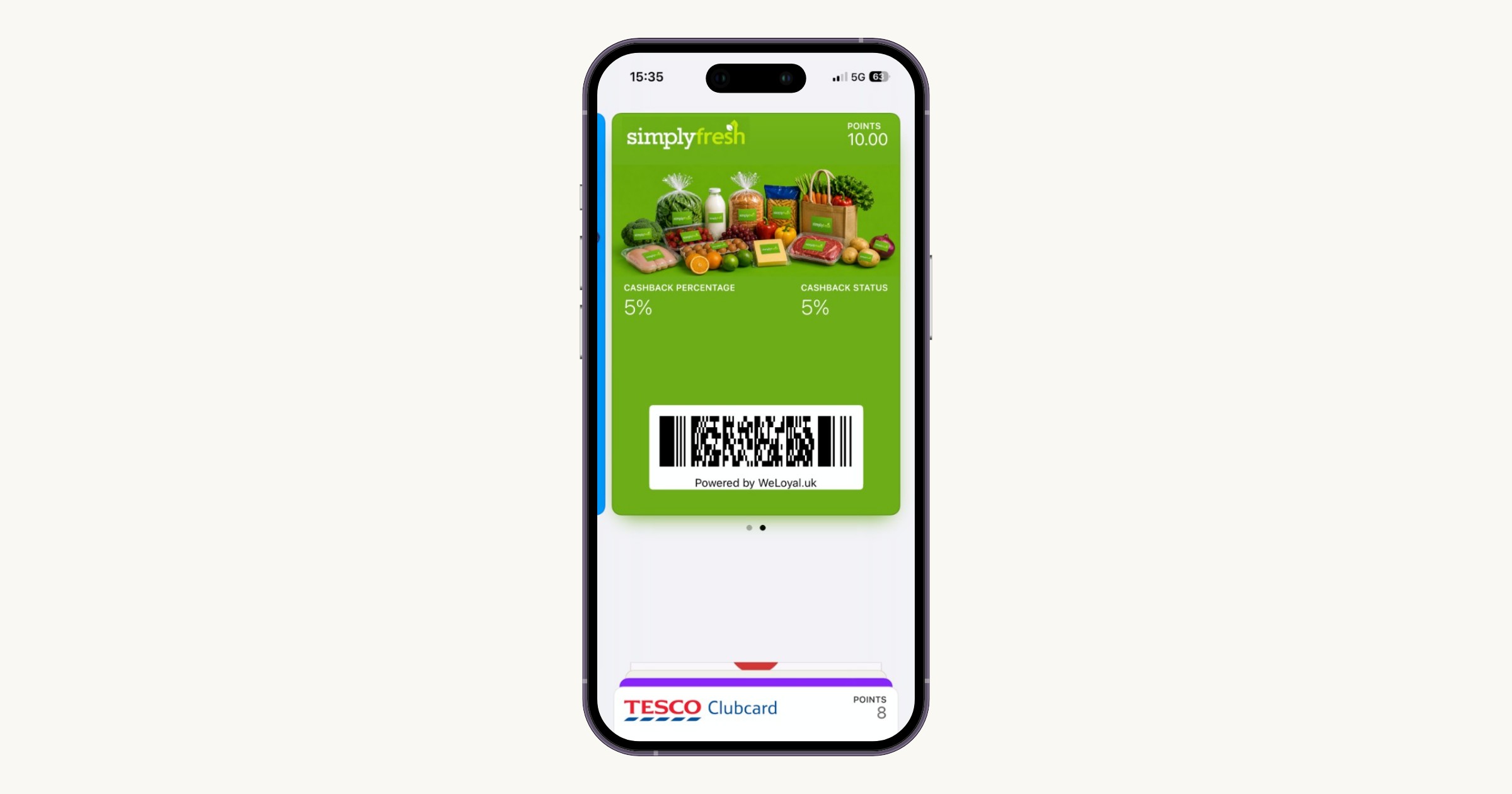
The Cashback Card: Rewarding Your Best Customers More, Automatically
Give customers a percentage of every purchase back as spendable points with WeLoyal cashback cards, built for businesses where purchase sizes vary.
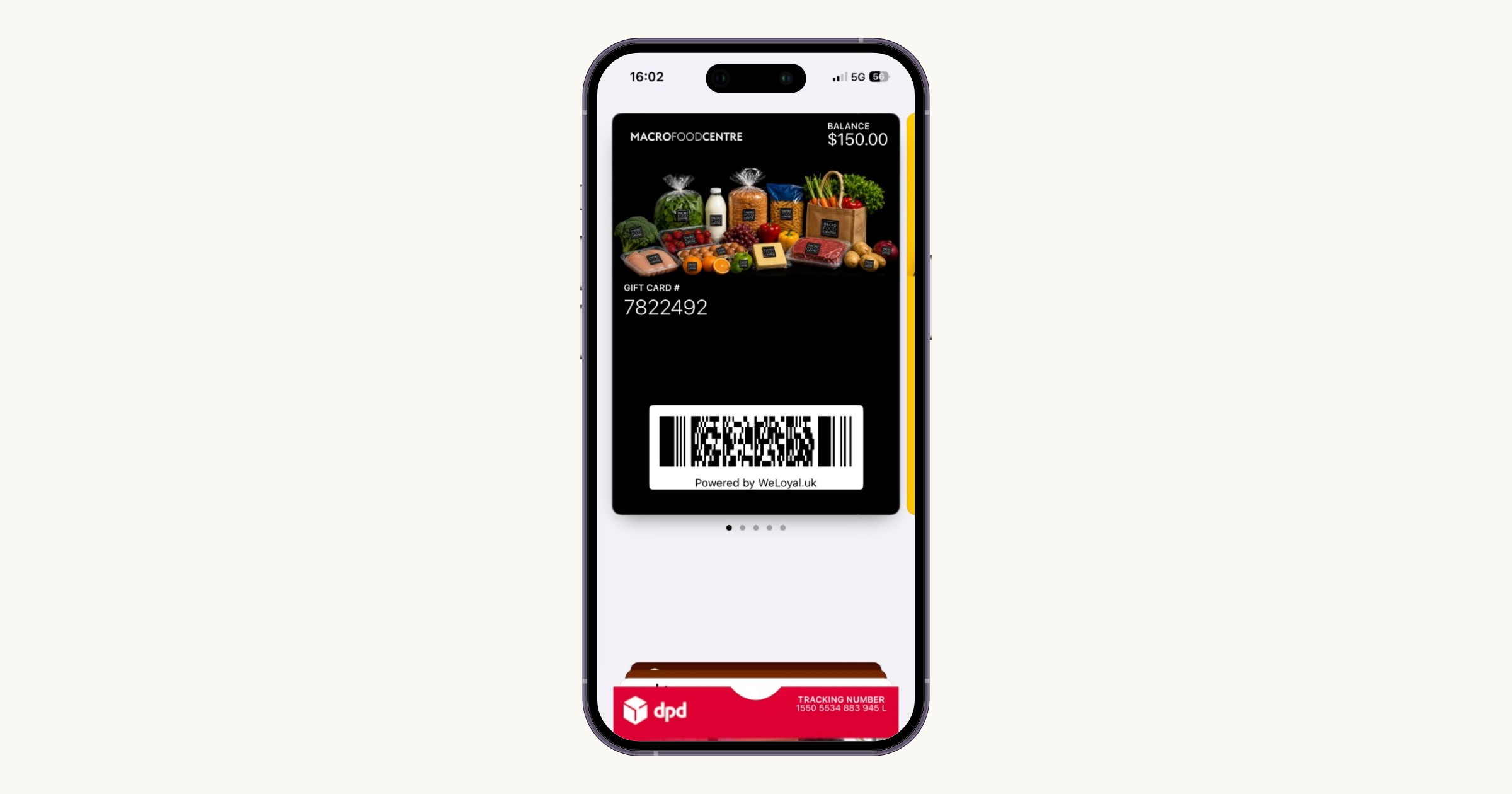
The Gift Card: Turning a Present Into a New Customer
WeLoyal digital gift cards let one person buy a prepaid balance and send it to someone else, installed straight into Apple Wallet or Google Wallet.
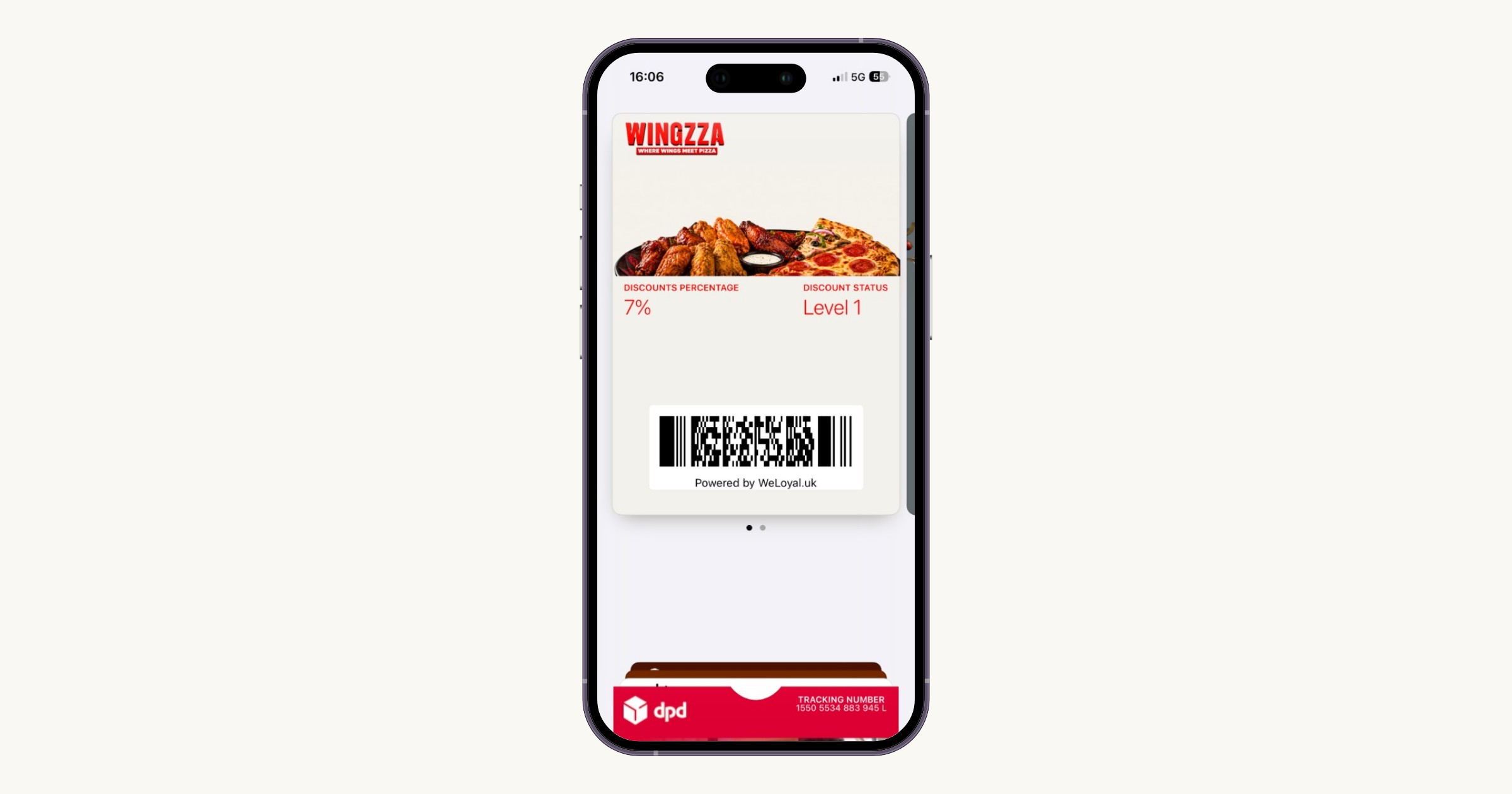
The Discount Card: Loyalty Without Making Anyone Do the Math
WeLoyal discount cards give loyal customers an automatic price reduction that climbs as they spend, with no points balance to track or redeem.